Our Services
Economy3 is a federated execution mesh where better climate tracing builds agentic advantage. In a multi-agent world, power migrates to deterministic execution—which becomes our flywheel for stronger economics, lower operating costs, more capable agents, better ethics, higher revenue, and customer delight. We're like Stripe (payments platform) for the agentic transition of real-life goods and services.
We partner on W3C, JSON-LD, and DPP infrastructure to coordinate products, services, events, and measurements. We replace platform rent, exception handling, and guessing with an architecture that returns value to the manufacturers, supply chains, and energy systems that sustain it. Partners keep their own companies, agents, storefronts, customers, and data—earning verification revenue rather than paying big tech. Open. Works everywhere. You never expose your store or customers. No lock-in. No sunk costs.
-
Climate compliance on open-source, distributed protocol networks builds a future where business runs on signed products, events, measurements, and your logic. Regulatory alignment, operational reality, and transaction economics make current alternatives expensive and unworkable sunk costs. Signed work moves AI from guessing to knowing.
-
The Agentic Economy is 4 things: Signed products, events, measurements—and your logic
On-chain signatures at value creation plus business logic align your work with everything now and everything that follows. Compensating activities shrink. Sector economics change. This is how we personalize, permission, and automate product lifecycles, compliance, and brand promises, while avoiding operational costs. Building for four things now delivers consent marketing, better shopping, and new services customers will love. It prepares for the $5 trillion multi-agent world to come.
-
We enable permissioned advertising and run permissioned climate and reporting feeds. We route benefit payouts for shared tracing, biodiversity actions, cultural design use, and resale payments. Partners keep their own product and service agents, storefronts, and customers. The federation model keeps capture and value local. We share only the permissioned minimum core needed for continuity across borders, anchored on validated records. We Build the We Economy for anyone, anywhere.
-
We standardize product, event, service, and measurement records so a business stays legible across sectors and situations. We validate signed JSON-LD interactions at the point of work so item state stays stable across handoffs, transformations, and service delivery.
-
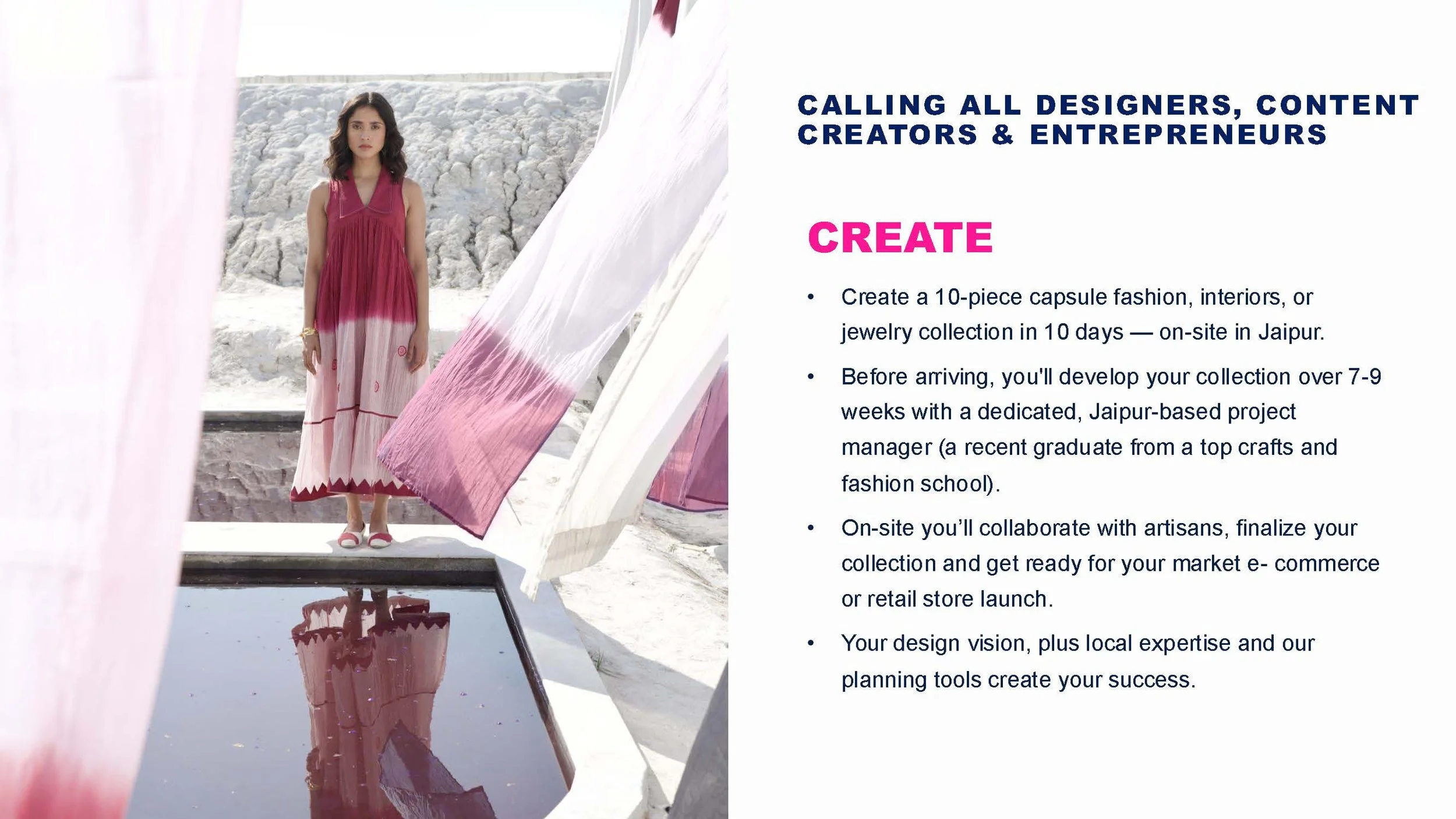
Designers and retailers co-create capsule collections and learn how to evolve for this new world.
This funds code development.
1) Open, interoperable standards that make culture visible. 2) QR commerce so anyone can work from their phone. 3) A web app (website) for tracing anything, anywhere, any time.
2026 Agentic Cliff
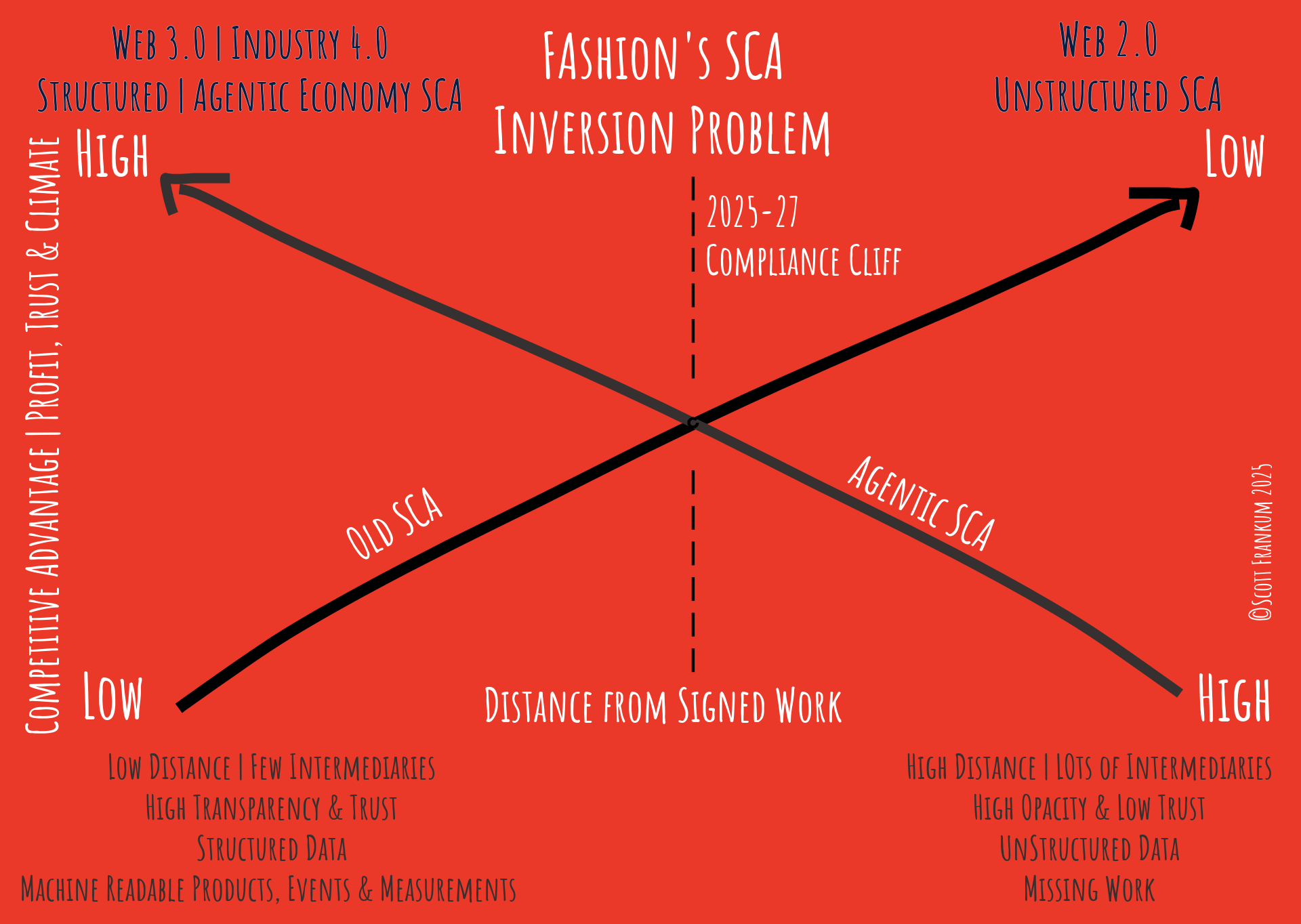

Economy3 builds traceability from the edge—starting with smallholders, informal sellers, and MSMEs—and spirals outward like a nautilus shell, scaling coordination, climate compliance, interoperability, and circularity. Our model combines leading standards and policy with the smallest viable product. The project grows by creating stakeholder value.


What Does Systemic Change
Look Like?
We think it looks like this
….the way systems grow: from use…through structure, strategy, and scale. Change grows out of five linked spirals, each expanding coordination, capability, and leverage.
WHAT IS ECONOMY3 & WHY DOES IT MATTER?
-
Historically, global commerce rewards those who control value over those who create it. Economy3 answers, "What market-based solutions use everyday tools to create parity, compliance, coordination, circularity, interoperability, transaction trust, access to global markets, and prosperity from the bottom up?"
At 30,000 feet, centralization and fragmentation break data interoperability, concentrate control and impose invisible taxes on the bottom 90%. We're at the beginning of Web3 megatrends like Digital Public Infrastructure, but a profound mismatch exists between systems, technology, and need—creating a serious global risk of propagating extractive capitalism. Who sets the standards and who gets there first matters.
-
At 5,000 feet, over 30% of global GDP now requires provable climate and supply chain data on raw materials, components, and finished products. The EU, one of the world's largest consumer markets, now requires Digital Product Passports for imports to get past its new digital wall.
At ground level, smallholders, informal producers, and MSMEs are poised to lose higher-margin export markets because current systems were built for the most complex use cases. We solve across all three levels with Global South–friendly tools that embed semantic Web3 interoperability, climate measurement, and real-time coordination into what people buy and use every day.





Get on the list!
Economy3:
Stakeholder-Driven Transformation
Economy3 builds traceability from the edge—starting with smallholders, informal sellers, and MSMEs—and spirals outward like a nautilus shell, scaling coordination, climate compliance, interoperability, and circularity. Our model combines leading standards and policy with the smallest viable product. The project grows by creating stakeholder value. We aim for innovation, useful tools, and product-market fit to ensure a positive reception from the people we help.Four-Layer Framework:
Standards Layer: W3C standards enable collaboration, transparency, and scale—foundational for SDG and Fediverse development.Policy Layer: The EU Green Deal used the scale of climate remediation to embed conservation, measurement, and circularity into daily life—as a model for circularity transitions anywhere.Everyday Activation Layer: We bring individuals, smallholders, and MSMEs into circular systems ahead of schedule. Linking international standards across domains builds interoperability, network effects, and pushes power to the edges.Technical Layer: Holochain provides a Global South–friendly blockchain alternative without cost, energy, or centralization drawbacks.
We offer free W3C-standard Digital Product Passports via mobile QR codes. This allows even the smallest entities to embed traceability, interoperability, and compliance data into local ecosystems via everyday transactions that avoid top-down impositions. Each scan adds provable data to a product's story, aligning with EU Digital Product Passport requirements even in low-resource settings that others ignore. Users gain access to premium pricing, financing, and formal markets, transforming fragmented supply chains into aligned ecosystems where shared data benefits everyone. (data.europa.eu). (EU's Digital Product Passport: Advancing transparency and sustainability | data. Europa.EU) (About - Weave3).Unlike competitors using expensive blockchain systems designed for the most complex supply chains, our solution protects vulnerable producers like India's handwoven textile sector, which risks losing 30% of sales under new EU rules without an alternative (About - Weave3), We are extensible, which allows different actors—NGOs, retailers, cooperatives—to extend capabilities on their own.By enabling source-level traceability, Economy3 shifts power dynamics, reduces intermediary dependency, and transforms participants into stakeholders—replacing a shareholder economy with a stakeholder economy.Follow us @jaipurcraftsfestival